neurorehabilitation in vr
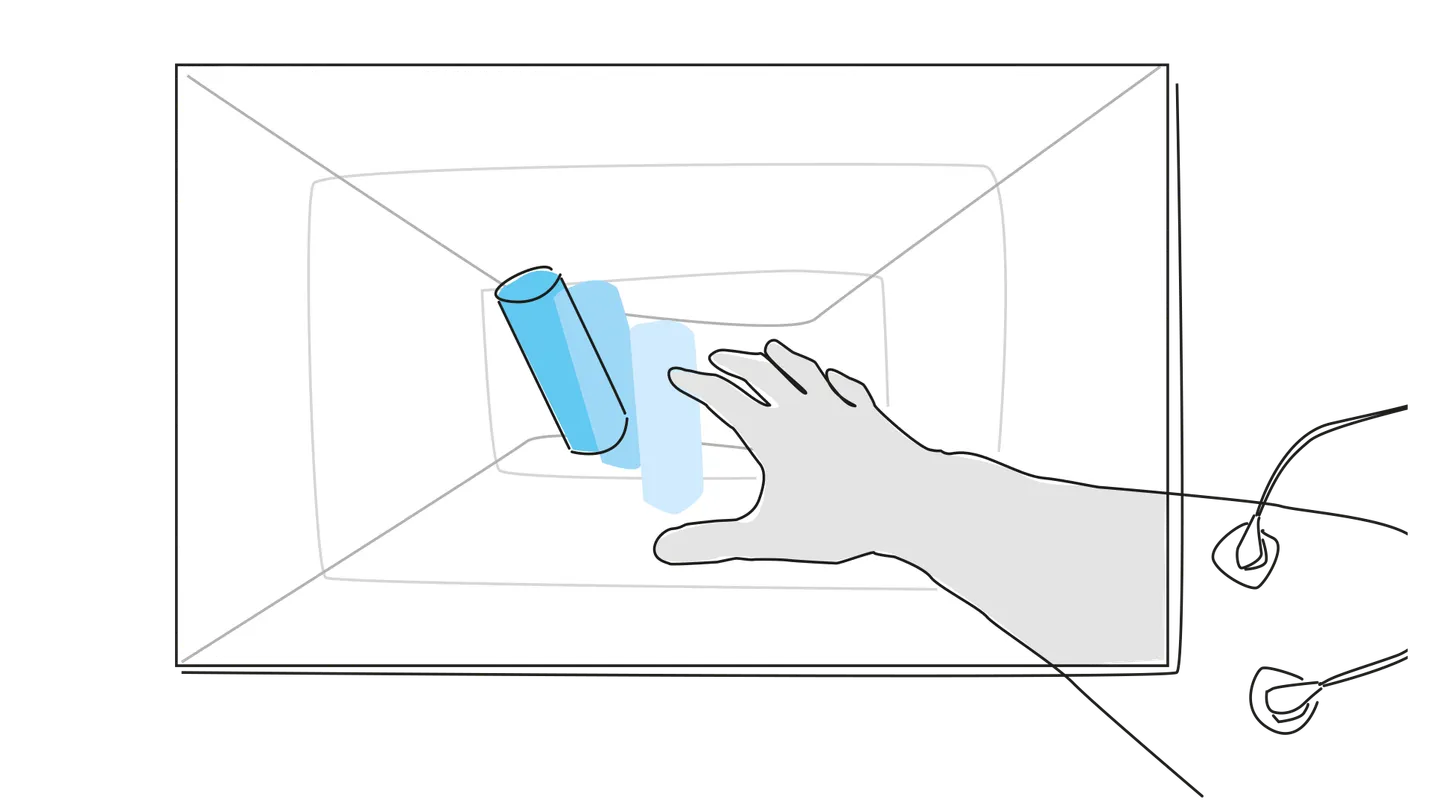
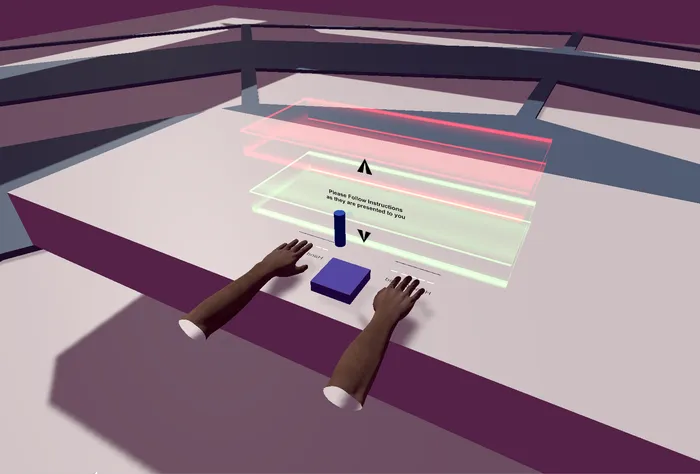
This project was focused on developing a VR-based platform[1] for the neurorehabilitaion of patients with impaired motor ability (such as stroke patients)[2] and studying the sense of Agency and Ownership over a virtual hand controlled by a user in VR using finger tracking hardware[3]. The platform can be compared to an evolution upon mirror box therapy for more complex use-cases.
My contribution was focused on designing systems that could be used to study the changes in behavior of a subject when given visual stimuli that may contrast with their physical movements in the real world[4].
The platform was presented on 6 September 2018 at the 36th annual conference of The Robotics Society of Japan[5].
Parts of this project cannot be shared publicly at this time, so please reach out for further information.
- [1] Inamura, T. & Mizuchi, Y. (2021). SIGVerse: a cloud-based VR platform for research on multimodal human-robot interaction. Frontiers in Robotics and AI. pmc.ncbi.nlm.nih.gov/articles/PMC8202404/
- [2] Soccini, A. M. (2024). Self-Avatar Motion Retargeting for Virtual Reality Post-Stroke Rehabilitation Therapy. CHI Extended Abstracts. dl.acm.org/doi/10.1145/3613905.3651131
- [3] Soccini, A. M., Grangetto, M., Inamura, T. & Shimada, S. (2019). Virtual Hand Illusion: The Alien Finger Motion Experiment. IEEE Conference on Virtual Reality and 3D User Interfaces. eidos.di.unito.it/publication/soccini-20191165/
- [4] Soccini, A. M., Clocchiatti, A. & Inamura, T. (2022). Effects of Frequent Changes in Extended Self-Avatar Movements on Adaptation Performance. Journal of Robotics and Mechatronics. fujipress.jp/jrm/rb/robot003400040756/
- [5] Soccini, A. M., Hoonjan, S., Grangetto, M. & Inamura, T. (2018). A Platform for Hand Embodiment and Alien Motion in Virtual Reality. 36th Annual Conference of the Robotics Society of Japan, talk 2I1-02 (archived programme). web.archive.org/web/20191124151316/http://rsj2018.rsj-web.or